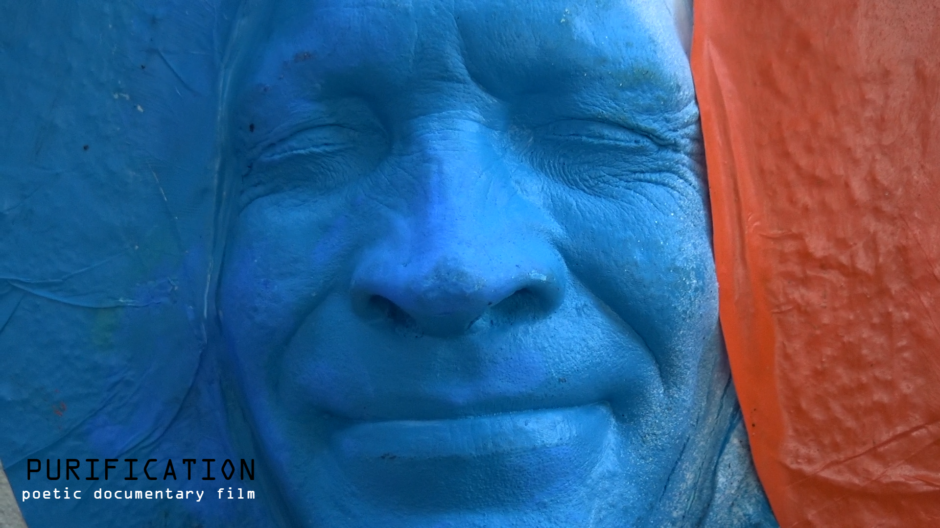
“التطهير” رحلة عاطفية جميلة ،هو فيلم وثائقي شعري عن الإنسانية التي تود أن تجعل حياتهم أكثر راحة وبهجة طوال تاريخها ، ولكن عندما يتحكم الجشع في الإنسان ، يصبح التطور التكنولوجي ضارًا للإنسانية والطبيعة ، ليبدا التساؤل عن مستقبل الناس ووجودهم.
يحتوي الفيلم على تسلسل قصصي يتكون من 7 فصول:
الخلق؛
المظهر الخارجي؛
العمل؛
الراحة؛
الجشع ؛
الإختفاء؛
ولادة جديدة والتنقية.
تم تصوير الفيلم في إسبانيا والبرتغال وأوكرانيا وإيطاليا وسويسرا ولوكسمبورغ وتركيا وروسيا وجمهورية التشيك وألمانيا ولاتفيا والسويد وأرمينيا وغيرهما.

The Purification movie has a certain storyline consisting of 7 chapters:
- Creation;
- Appearance and Work;
- Rest;
- Greed;
- Alarm
- Disappearance;
- Rebirth and Purification.
The shootings of the film took place in Spain, Portugal, Ukraine, Italy, Switzerland, Luxembourg, Turkey, Russia, Czech Republic, Germany, Latvia, Sweden, Armenia etc.
Storyline
Purification unfolds as a cyclical human journey told in seven chapters, moving from emergence to erasure and toward a fragile return.
Creation marks the beginning of human presence, where life, imagination, and intention arise in close harmony with the natural world.
Appearance and Work follow as identity and civilization take shape through rituals, roles, and labor; creation becomes productivity, and purpose begins to harden into routine.
Rest offers a pause in the cycle – a space for contemplation, celebration, and spiritual connection, suggesting balance and meaning beyond constant making.
The trajectory shifts in Greed, where desire expands into excess and accumulation overtakes care, distorting the original impulse of creation.
Alarm introduces rupture: signs of crisis, fear, and urgency surface as consequences can no longer be ignored and the world signals its limits.
In Disappearance, absence dominates – cultures, landscapes, and human traces fade, leaving behind silence and loss.
Only in the final moments does Rebirth and Purification reveal itself, emerging as an unseen chapter until the end, proposing not resolution but the possibility of renewal – a return that questions whether humanity has learned enough to begin again differently.
Short Synopsis
Purification traces the story of humanity through its expanding appetite for pleasure. From the first acts of creation and survival, humans learn to shape the world in search of comfort, joy, and fulfillment. Work, rest, and celebration form a fragile harmony, where desire remains tied to need.
Over time, pleasure detaches from necessity. The search for satisfaction grows without limits, transforming desire into greed. What once brought balance begins to demand more – more resources, more control, more stimulation. This expanding hunger reshapes the world, exhausting landscapes, distorting relationships, and eroding the meaning of progress itself.
As pleasure becomes insatiable, humanity confronts the consequences of its own excess. Purification moves toward a moment of reckoning, where collapse and silence open a final question: when pleasure no longer satisfies, can restraint, awareness, and renewal offer a path toward beginning again?
Long Synopsis
Chapter 1. Creation
In the beginning, there is no explanation – only emergence. Life appears not as an event, but as a condition already in motion. Water breathes against stone; light grazes surfaces that seem older than memory. Humans enter this world not as masters, but as participants within a larger rhythm. Bodies move among landscapes that do not yet resist them. There is curiosity without urgency, presence without accumulation.
We observe gestures of becoming: hands touching earth, faces lifted toward open space, eyes meeting other eyes. An animal looks back at us – not fleeing, not submitting, but holding the gaze. A llama, still and alert. A koala, suspended between fragility and endurance. Their look does not accuse; it mirrors. From the very first moments, the film establishes this mutual visibility. We are not alone in looking. We are being looked at.
Creation unfolds as an ongoing state rather than a singular origin. Humans invent meaning through movement and repetition. They gather, separate, and gather again. The natural world is not yet framed as a resource; it is a shared environment, vast and indifferent, yet responsive. Water flows freely – over rocks, through caves, along skin. Underwater chambers reveal stalactites shaped over time beyond human scale. These spaces are not conquered; they are entered cautiously, as if borrowing time from something ancient.
The myth here is not heroic. It is humble. Humanity appears as one form among many, capable of wonder, capable of care, capable of restraint. Desire exists, but it has not yet exceeded need. Pleasure does not yet demand more than presence. Creation, at this stage, is not about making monuments, but about recognizing existence.
We sense already that this state cannot last. Not because it is wrong, but because it is incomplete. Creation carries within it the seed of movement forward – toward form, identity, and eventually, excess. The gaze of the animals lingers, patient, as if aware of what is coming.
Chapter 2. Appearance and Work
Gradually, humanity begins to define itself. Appearance emerges – not merely as visibility, but as distinction. Bodies are adorned. Rituals take shape. Movement becomes coded. Humans no longer only exist; they present themselves to one another. Identity forms through repetition and recognition.
Work enters not as punishment, but as extension of creation. Hands learn tasks. Bodies repeat gestures that transform materials. Labor becomes a language through which humans speak to the world and to each other. There is pride in making, in building, in producing continuity. Work creates rhythm – days measured by effort, nights by rest.
Crowds appear. Individuals move within collectives. Coordination replaces improvisation. The world becomes structured through schedules, roles, and expectations. Work organizes time; appearance organizes belonging. These developments feel necessary, even beautiful. Civilization is not yet heavy. It is still light enough to dance.
We witness rituals that bind communities across generations. The dance of Native Americans unfolds as a continuity of memory, where movement carries knowledge older than written history. Elsewhere, a Tanoura dancer spins endlessly, lights embedded in the skirt tracing circles of color in darkness. The dance is both celebration and discipline – an act that requires surrender to repetition. The body becomes a vessel for pattern.
Illusion appears alongside work. An illusionist performs tricks that delight and deceive. Objects vanish, reappear, transform. The audience accepts the pleasure of being fooled. Illusion does not yet threaten truth; it enhances wonder. It is understood as play.
Animals return intermittently – still watching. The llama, the koala. Their presence now contrasts with the increasing density of human activity. They do not participate in work, yet their survival becomes quietly dependent on it. The balance begins to shift.
At this stage, appearance and work are not opposed to life; they are its visible expressions. Yet something subtle changes. Work begins to exceed necessity. Appearance begins to demand recognition. Productivity is no longer only about survival, but about growth. More is possible. More becomes desirable.
We recognize ourselves here. We recognize the pride of making, the comfort of routine, the pleasure of being seen. Nothing feels dangerous yet. The structure holds. The system works. The myth continues forward.
Chapter 3. Rest
Rest enters as interruption. A pause within the rhythm of work and appearance. Humanity remembers stillness – not as absence, but as fullness. Bodies slow down. Breath deepens. Time stretches.
Rest takes many forms. Individuals close their eyes in meditation, floating in water or seated on earth. Some lean against trees, embracing trunks as if listening to something beneath the bark. Others gather in celebration – music, laughter, shared movement dissolving hierarchy. There is release here, a sense that effort can be suspended without collapse.
Water returns as a central presence. People pour water on strangers in the street, laughing, breaking social boundaries through playful excess. For a moment, identity dissolves. Everyone is equally soaked, equally exposed. The gesture feels cleansing, communal, almost innocent. Water becomes a medium of connection rather than consumption.
Nature appears generous again. Fish leap out of water near a small waterfall, repeating the same motion endlessly. Their movement is instinctive, unproductive, unmeasured. It exists for itself. Watching them, we sense a rhythm untouched by human schedules.
Rest suggests an alternative logic: that value might lie in presence rather than output, in awareness rather than accumulation. It hints that humanity could choose balance – not by abandoning work, but by remembering its limits.
Yet rest is temporary. It does not restructure the system; it interrupts it. The pause refreshes bodies so that work may resume. Celebration prepares people to return to effort with renewed energy. Rest becomes functional.
Still, something important happens here. Humanity becomes aware – if only briefly – that another way of being is possible. The memory of rest lingers, even as the rhythm accelerates again.
Chapter 4. Greed
The shift is gradual, almost invisible. Desire expands without clearly crossing a line. What once satisfied now feels insufficient. Pleasure demands repetition, repetition demands intensification. Greed does not appear as villainy, but as misunderstanding – confusing fulfillment with accumulation.
Consumption accelerates. Objects multiply. Experiences are no longer enough unless they are larger, louder, more extreme. Celebration turns into spectacle. Ritual becomes performance for display rather than continuity. Work detaches from meaning and attaches to growth.
A plate appears: a dead parrot served with potatoes. The image is quiet, almost banal, yet deeply unsettling. What once spoke, flew, and watched is now reduced to sustenance. There is no visible violence – only aftermath. Consumption no longer requires confrontation with its consequences.
Illusion returns, but now it distracts rather than delights. Tricks obscure rather than reveal. The pleasure of being fooled replaces the desire to understand. Greed feeds on illusion, allowing humanity to continue without seeing itself clearly.
Crowds grow denser, movement more frantic. The gaze of the animals returns – unchanged, patient, increasingly out of place. The llama and the koala look on as if witnessing a familiar pattern, one they have seen before in other forms.
Greed is not framed as moral collapse, but as tragic acceleration. Humanity does not choose destruction; it chooses more. Desire detaches from awareness. The system rewards excess. The logic of growth overrides restraint.
We recognize ourselves again. The pleasure is real. The satisfaction is immediate. Yet something hollows out beneath it. Greed promises fulfillment but delivers dependency. The myth tightens.
Chapter 5. Alarm
Signs begin to appear. Not catastrophes yet – signals. Cracks in rhythm. Disruptions that could be read as warnings.
Nature responds subtly. Water behaves differently. Landscapes feel strained. The atmosphere thickens. Movements that once felt effortless now require force. Animals retreat, then reappear briefly, their gaze heavier.
Humans notice – but do not stop. Alarm is present, but inconvenient. It threatens comfort, progress, identity. The system offers explanations, distractions, reassurances. Illusion works harder than ever.
Crowds move faster, louder, as if noise could drown out unease. Rituals continue, but their meaning feels thinner. Celebration becomes compulsory rather than joyful. Rest no longer restores; it numbs.
Alarm is not ignorance – it is recognition without response. Humanity senses that something is approaching, yet chooses continuity over change. The cost of stopping feels higher than the cost of continuing.
This chapter stretches in tension. Disaster is not yet visible, but inevitable. The film does not announce collapse; it allows it to approach silently. Alarm becomes background noise.
We, as observers, feel implicated. We recognize the moment when understanding could lead to transformation – and does not. The myth moves forward not through surprise, but through avoidance.
Chapter 6. Disappearance
Collapse does not arrive with spectacle. It arrives through absence.
Spaces empty. Movements slow, then stop. Landscapes appear stripped of their former density. What once felt permanent now feels temporary. Human traces fade.
Cultures thin out. Gestures lose continuity. Rituals no longer transmit meaning. Work becomes mechanical, then pointless. Objects remain, but their makers are gone.
Water dominates again – but now as erasure. It washes over remnants, dissolving edges. Underwater caves return, but this time they feel enclosing rather than protective. Stalactites hang like silent witnesses to time that outlasts humanity.
Animals appear rarely now. When they do, their gaze feels final. The llama and the koala no longer mirror us; they outlast us. Their presence suggests continuity beyond human disappearance.
The dead parrot returns in memory – not as image, but as consequence. Consumption has emptied its own future. What was taken cannot be replaced at the same scale.
Disappearance is not punishment. It is outcome. The film refuses drama, refusing blame. Humanity fades as civilizations before it have faded – not uniquely, but recognizably.
Silence expands. The myth seems to end – not with resolution, but with exhaustion. The screen fills with what remains when presence withdraws.
Chapter 7. Rebirth and Purification
Only at the very end does a new chapter reveal itself.
Time begins to rotate backward – not as reversal, but as reconfiguration. Images rewind, not to undo damage, but to re-enter awareness. The movement is slow, deliberate. Memory reorganizes.
Meditating individuals appear – in water, on land, embracing trees. Their stillness contrasts with the earlier frenzy. These bodies are not escaping the world; they are re-entering it differently. Awareness replaces accumulation. Presence replaces production.
Water returns once more – not as flood, not as spectacle, but as medium of renewal. It carries bodies without resistance. It cleanses without erasing.
Rebirth is not triumphant. It is tentative. The film does not promise salvation. It proposes learning. Humanity begins again – not from innocence, but from experience.
The animals’ gaze returns one last time. This time, it feels mutual again.